
ICP Sample Preparation Without Hydrofluoric Acid: The Benefits of Electrical Fusion
Is it difficult to fully dissolve hard-to-digest samples without using hydrofluoric acid (HF)?
For many silicate-rich and refractory matrices, fusion offers an attractive alternative to conventional acid digestion. The sample is completely decomposed at high temperatures and then dissolved for analysis by ICP-OES or ICP-MS.
Complete and reproducible digestion is essential for reliable ICP results. When acid digestion fails to completely decompose a complex matrix, elements may be underestimated and reproducibility may decrease. Electrical fusion combines complete digestion with speed, reproducibility, and automation.
Complete Digestion of Difficult Matrices
In borate fusion, the sample is mixed with a lithium borate flux at high temperatures. This allows even matrices that are difficult to digest to be completely broken down. After dissolving the resulting melt, a clear and homogeneous solution is obtained for further analysis by ICP-OES or ICP-MS.
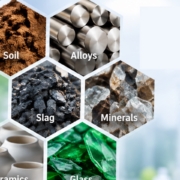
Borate fusion is particularly well-suited for, among other things, geological samples and ores, silicates and aluminosilicates, ceramic materials, industrial minerals, and refractory oxides.
Whereas acid or microwave digestion of such samples sometimes results in incomplete digestion, fusion is designed to achieve complete decomposition of the matrix. This contributes to better element recovery, higher reproducibility, and reliable quantification.
Less Dependent on HF
For the digestion of silicate-rich samples, for example, hydrogen fluoride (HF) is regularly used in conventional acid digestion. The use of HF places high demands on safety, laboratory procedures, and the choice of materials. HF also requires extra attention in ICP analysis due to the chemical resistance of components in the sample introduction system.
Borate fusion can offer an alternative for many of these matrices that does not require HF. Furthermore, fusion can simplify the workflow because complex combinations of acids and multiple digestion steps can often be avoided.
Why electric fusion?
Fusion can also be performed in a muffle furnace, but in that case, heating, mixing, and processing the melt are largely dependent on manual operations. An electric fusion fluxer automates a large part of this process and ensures precisely controlled and reproducible conditions.
The main advantages for ICP sample preparation:
- Complete digestion of hard-to-digest matrices
- High reproducibility due to precise temperature control and automated mixing
- Fast sample preparation and a more efficient workflow
- Fewer manual steps, reducing the risk of errors and contamination
- Safer, in part by reducing or avoiding HF in suitable applications
- Standardized methods, less dependent on the individual operator
Our lineup for electric fusion
Depending on the number of samples and the desired capacity, Katanax® offers various electric fusion fluxers for preparing solutions for ICP analysis and glass beads for XRF.
Katanax® X-100 – compact and flexible
The X-100 is a compact, single-position fusion fluxer designed for laboratories handling smaller sample volumes. Rapid heating, precise PID temperature control, and programmable fusion methods ensure reproducible and efficient sample preparation.
Katanax® X-300 – greater capacity
The X-300 accommodates three samples per cycle, making it the ideal middle ground between the compact X-100 and the high-throughput X-600. The system combines automated fusion with precise temperature control and is suitable for laboratories with an average sample volume.
Katanax® X-600 – Maximum Productivity
For larger sample volumes, the fully automated X-600 can process six samples simultaneously. With a capacity of 24 to 30 samples per hour, the system is ideally suited for routine laboratories with high sample throughput.
Katanax thus offers a suitable electric fusion solution for every capacity: from one to six samples per cycle.
Which fusion solution is right for your ICP analysis?
Would you like to reduce or eliminate HF from your sample preparation workflow, process hard-to-digest samples more reliably, or further automate your sample preparation? We’d be happy to help you determine which fusion method and configuration best suit your samples, desired capacity, and ICP application.
Fill out the form below and we’ll contact you as soon as possible. Would you like to speak with one of our product specialists right away? Then call us at +31 88 4678 740.


