
ASOSolv™ – A smarter solvent for ICP oil analyses
 The analysis of wear metals and additive elements in oil using ICP-OES is traditionally performed using certified reference materials (CRMs) based on organometallic compounds. This requires organic solvents, which are often relatively toxic. Furthermore, this means laboratories are reliant on separate oil-based standards, whereas aqueous inorganic standards are used for many other ICP analyses.
Inorganic Ventures therefore investigated whether existing, highly stable aqueous inorganic ICP standards could also be used for the analysis of metals in oil. The challenge was to develop a solvent in which both the aqueous standard and the oil sample are fully miscible.analyse van Wear Metals en additiefelementen in olie met ICP-OES gebeurt traditioneel met organometallische gecertificeerde referentiematerialen (CRM’s). Hiervoor zijn organische oplosmiddelen nodig die vaak relatief toxisch zijn. Bovendien zijn laboratoria hierdoor aangewezen op aparte oliegebaseerde standaarden, terwijl voor veel andere ICP-analyses waterige anorganische standaarden worden gebruikt.
Inorganic Ventures onderzocht daarom of de bestaande, zeer stabiele waterige anorganische ICP-standaarden ook gebruikt kunnen worden voor de analyse van metalen in olie. De uitdaging was een oplosmiddel te ontwikkelen waarin zowel de waterige standaard als het oliemonster volledig mengbaar zijn.
The Solution: A Hybrid Calibration Method
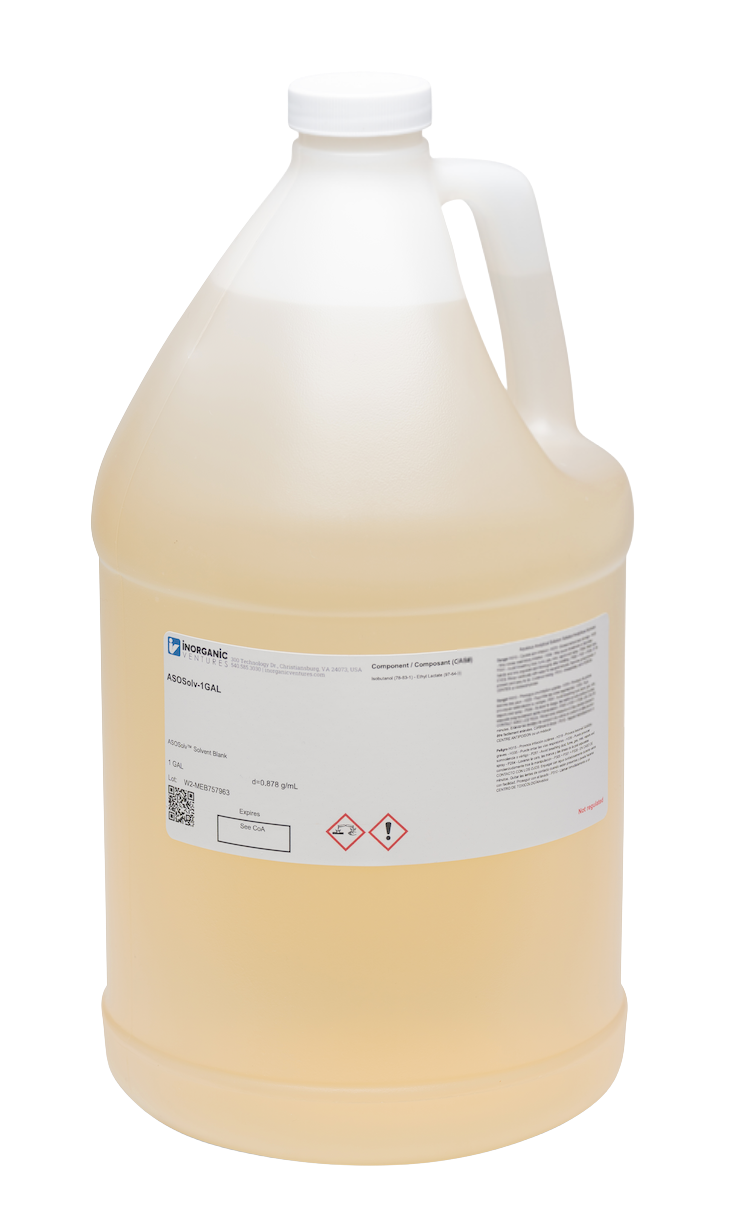
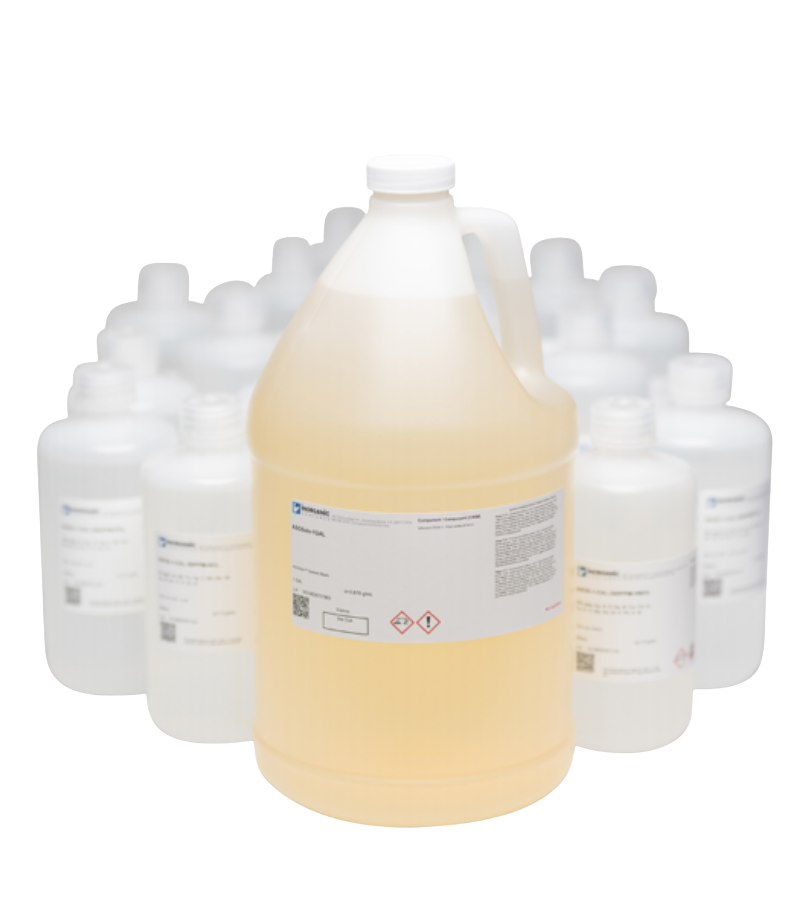
The result is the new organic solvent ASOSolv™, developed primarily from green and sustainable raw materials. What makes it unique is its ability to dissolve both aqueous inorganic metal standards and oil samples. This creates a hybrid aqueous/organic calibration method for ICP-OES.
In addition, cobalt (Co) and yttrium (Y) have been added to the solvent as internal standards. This allows both calibration standards and oil samples to be easily diluted in a single step. In the described method, for example, samples are diluted directly 1:10 with the solvent.
ASOSolv™ bridges the gap between aqueous ICP standards and oil analysis. It makes it possible to use the same trusted inorganic standard chemistry for oil samples, simplifies standard and sample preparation, expands analytical capabilities—including sulfur analysis—and, at the same time, offers a less harmful and more sustainable alternative to traditional organic solvents.
Key Benefits
The method allows for the analysis of 27 elements and includes all elements listed in ASTM D5185-18 and D6595-16. An interesting additional benefit is the ability to include sulfur (S) in the calibration. This is difficult with traditional organometallic standards, because the organometallic raw materials themselves can contain significant, unquantified amounts of sulfur.
The validation tests show that the new method correlates very well with traditional organometallic standards. The measured values were largely within 2% of the certified values. Good accuracy and reproducibility were also achieved even with short analysis times.
In addition, ASOSolv™ proved effective for cleaning and flushing oil from the ICP-OES introduction system. No carbon buildup was observed on the torch injector during the tests.
Practical Implications for an ICP Laboratory
A laboratory does not necessarily have to switch entirely to the new hybrid standards. There are, in fact, two applications:
- New hybrid method: Use aqueous inorganic ICP standards + ASOSolv™ for the calibration of oil analyses.
- Improving the traditional method: continue using existing organometallic oil standards, but use ASOSolv™ with Co and Y as a cleaner and less harmful diluent for both standards and samples.
Sample preparation remains virtually the same as the existing procedure, which, according to Inorganic Ventures, means the transition requires little adjustment to the daily laboratory routine.
Frequently Asked Questions About ASOSolv™ and ICP Analysis of Oil:
Can I use aqueous ICP standards for oil analysis?
Yes. Inorganic Ventures’ new method makes it possible to use aqueous inorganic ICP standards for the calibration of oil analyses. ASOSolv™ ensures that both the aqueous standards and the oil samples can be incorporated into the same organic matrix.
Do I need to replace my existing organometallic oil standards?
No. Laboratories can continue to use traditional organometallic standards and use ASOSolv™ as a diluent. A complete transition to the hybrid aqueous/organic calibration method is therefore not necessary.
How are the oil samples diluted?
In the method described, the oil samples were diluted 1:10 with the organic solvent to which cobalt (Co) and yttrium (Y) had been added as internal standards. Dilution can be performed either gravimetrically or volumetrically.
Have Co and Y already been added to the solvent as internal standards?
Cobalt and yttrium serve as internal standards. These elements have not been added to the solvent because this is not desirable for every application. Therefore, they must be added to ASOSolv separately.
Which elements can be determined using this method?
De ontwikkelde standaardsets bevatten in totaal 27 elementen. De methode omvat alle elementen die worden voorgeschreven in ASTM D5185-18 en D6595-16, plus enkele aanvullende elementen.
Can this method also be used to determine the sulfur content in oil?
Yes. That is precisely an interesting advantage of the hybrid method. With traditional organometallic standards, sulfur is difficult to calibrate because the organometallic starting materials used may themselves contain unquantified amounts of sulfur. With the hybrid standards, however, sulfur can be added to the calibration.
This post is also available in: