Nieuw MultiVIEW magnetron ontsluitingssysteem

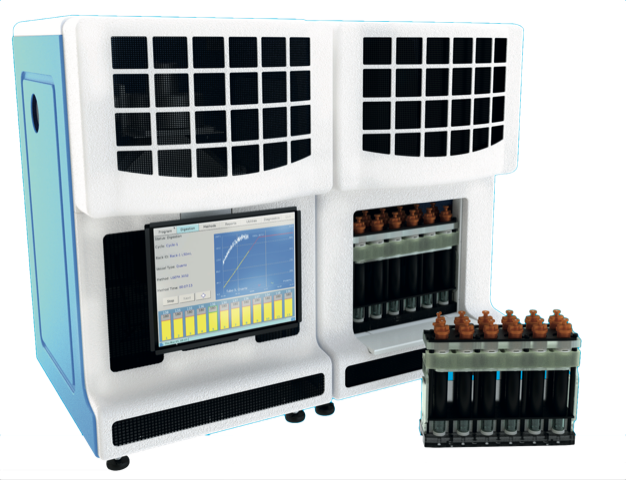
SCP Science heeft een uniek, volautomatische magnetron ontsluitingstunnel gelanceerd; de MultiVIEW. SamplePrep voor de ICP-OES en/of ICP-MS analyse.

Bijzonder aan dit systeem is dat grote reeksen monsters die uiteenlopend van aard zijn achter elkaar ontsloten kunnen worden. Dit als monstervoorbewerking voor analyse met de ICP-OES of ICP-MS. Per individueel monster kan dan ook een andere temperatuur gestuurde methode worden toegewezen!

Dit is mogelijk omdat het systeem uitgerust is met 12 dynamische Microwave Cavities die per positie afzonderlijk regelbaar zijn. Iedere positie is uitgerust met een eigen magnetron en IR  temperatuursensor.

Van alle 12 posities wordt real time weergave van temperatuur versus tijd getoond.

In combinatie met 4  AutoLOADER units is het mogelijk om tot 300 monsters automatisch achter elkaar te ontsluiten.

Het systeem wordt geleverd met een geïntegreerd 15” kleuren Touch Screen dat alle operationele parameters overzichtelijk in beeld brengt. Het scherm beschikt over een gebruiksvriendelijke intuïtieve interface die tijdens de run de ontsluitingsparameters laat zien en waarmee u de run op ieder moment kan wijzigen of stoppen.

Als het nodig is om in te zoomen op een afzonderlijk monster, dan kan dat. U kunt een monster op een volledig scherm bekijken met maximale details.  Ter informatie wordt ook de intensiteit van de magnetron power weergegeven.


Maintenance ICP-MS Cones

Maintenance of ICP-MS cones

use your Cones longer, practical tips and background information

Introduction

Troubleshooting and maintaining your ICP-MS sample introduction system can be a daunting task. However, not following proper maintenance

on a regularly scheduled basis can be costly. This is especially true particular for ICP-MS laboratories that handle a large number of samples. In this article, we highlight why, when and how to maintain your ICP-MS interface Cones, as well as the importance of conditioning the Cone. Also discussed are the advantages of platinum (Pt) coated Cones. It should be noted that these are recommended maintenance guidelines, many of which are borrowed from the ICP-MS manufacturers. Always consult the recommended maintenance guidelines from the manufacturer of your instrument

Most Common Problems

The most common type of problems with ICP-MS Cones are related to clogging of the Orifice or due to corrosion. The interface cones are also very fragile, especially the tip. Damage to the tip changes the diameter of the Orifice and the performance of the Cone. Using Cones that are in poor condition for your ICP-MS can lead to increased background signal, Memory effects, loss of sensitivity and poor precision. All of this can lead to interrupted analyses and having to re-run sample sequences, resulting in lost time and reduced profits.

When to clean?

Frequency

The frequency with which they need to be cleaned is highly dependent on the
application and the load on the instrument. Excessive cleaning can lead to a shorter life, so unnecessary cleaning should be avoided. If the samples are clean and the usage is low, the Cones may only need to be cleaned monthly. But if, for example, the instrument is in continuous use, and/or the samples contain high levels of dissolved solids or are highly corrosive, then the Cones will need to be cleaned daily.

Sample types

If your laboratory analyzes different types of samples, it may be necessary to clean the Cones in between. For example, one sample matrix contains a high concentration of an element to be analyzed and another matrix is that same element at trace level. To avoid cross-contamination, clean the Cones in between.

Visible Deposits

If there are visible deposits near the opening or if the opening is blocked or distorted. As mentioned above, a deterioration in the performance of the ICP-MS may also indicate that the Cones may need to be cleaned. In particular, watch for increased background signal, Memory effects, loss of sensitivity, or distorted peak shapes.

Change in Vacuum Measurement

A change in the vacuum measurement of the instrument may also indicate problems with the Cones. If the orifice is blocked, the vacuum will increase (pressure drop). A deterioration in the measurement results will be noticeable before this point. If the vacuum decreases (and the pressure increases), this may indicate that the orifice has worn out and become larger. If this occurs, the Cone should be replaced. Since the Sampler Cone is more exposed to the plasma, it will usually need to be cleaned more often than the Skimmer Cone. If instrument performance does not improve after cleaning, the Cones may need to be replaced or refurbished (Pt tipped).

Mode of cleaning

The method of cleaning also depends on the application. If the samples are relatively clean, gentle cleaning is sufficient. In some cases, routine cleaning with a cotton swab and DI water is appropriate. But if the samples contain high levels of dissolved solids or are highly corrosive, a more aggressive cleaning procedure is required. A diluted Citranox solution is a gentle and effective cleaning agent and we recommend trying this first. If Citranox is not effective, it may be necessary to use a more aggressive cleaning agent such as nitric acid.

However, we recommend using nitric acid only when necessary. Nitric acid is more corrosive than Citranox and prolonged use will shorten the life of the Cones. Even Citranox will corrode the copper Cones, so they should not be exposed to high concentrations of Citranox or prolonged exposure to it.

Thread Protection

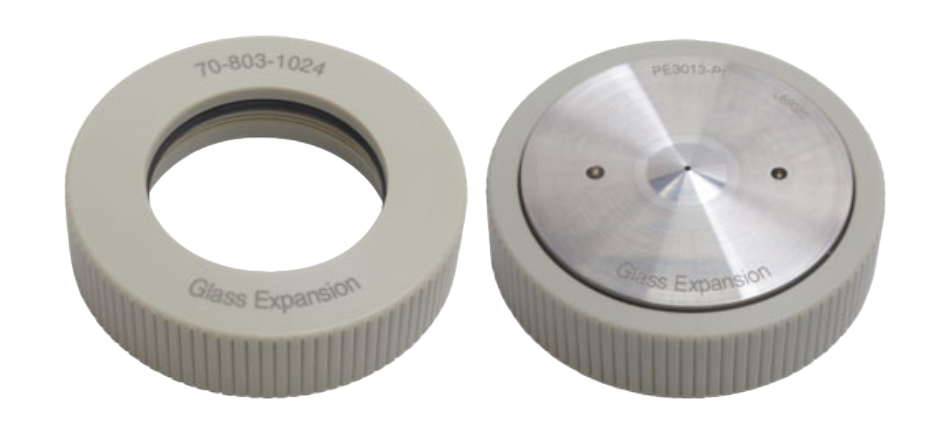
When cleaning threaded Cones, it is important that the threads do not come into contact with a corrosive solution. If the threads become corroded, the Cone may not seal properly or may adhere to the base and be difficult to remove. And with Pt-tipped cones, there is a good chance that the threads for the Pt insert will wear out. It is also important to keep the threads in good condition to prevent the possibility of thread deformation and possible damage to the instrument body. Glass Expansion has developed the ConeGuard Thread Protector to seal the threads and protect them from corrosion during the cleaning process. The ConeGuard is simply screwed onto the threaded portion of the Cone and O-ring seals prevent the solution from coming into contact with the thread.

Pre-soaking

Pre-soaking the Cones in a cleaning agent such as Fluka RBS-25 before cleaning with Citranox or nitric acid helps in the cleaning process. Citranox is produced by Alconox Inc. (www.alconox.com) and Fluka RBS-25 by Sigma-Aldrich. Fluka is available through us (P/N FLUKA25). Always use safety glasses and gloves. Be careful when handling the Cones; the tip is very easy to damage. Hold the Cone by the edge and use only light pressure with your hand when cleaning the tip. Never use tools to clean Cones. The cleaning process does not necessarily reproduce the original, newly polished appearance. Sample deposits should be removed, but it is usually not a problem if the Cone is discolored. This may even result in a more stable signal (see Cone Conditioning).

Cleaning Methods

There are three common methods of cleaning Cones. The recommended Citranox and nitric acid concentrations, and cleaning times, should be used as guidelines only. Given the wide range of ICP-MS applications and samples, you may need to experiment a bit to find the best cleaning procedure for your application. We recommend that you do not use more nitric acid than necessary, as it will corrode the Cone. If nitric acid is used excessively, the size of the Cone opening may be increased. If this happens, or if the tip is damaged or deformed, then the Cone should be replaced.

The following cleaning methods are listed, from the simplest and gentlest, Method A, to the most thorough and aggressive, Method C.

Method A: Soak in Citranox daily or weekly, depending on the application.

1.Soak the Cones overnight in a 25% solution (4x dilution) of Fluka RBS-25. 2. Rinse with deionized water. 3. Place the Cones in a 2% Citranox solution and soak for approximately 10 minutes. 4. Wipe with a soft cloth or with Kimwipe dipped in the Citranox solution. 5. Wash thoroughly with deionized water. 6. Place Cones in deionized water and soak for 2 minutes to remove any remaining Citranox. 7. Change the deionized water and repeat step 6 at least twice – the Cones should be washed at least three times, each time with fresh deionized water. 8. Rinse with deionized water and allow to dry or blow dry with clean argon or nitrogen. Make sure the Coness are completely dry. It may help to heat them in a laboratory oven at approximately 60 °C

Method B: Ultrasonic cleaning in Citranox, daily or weekly, depending on the application.

Soak Cones overnight in a 25% solution (4x dilution) of Fluka RBS-25. 2. Rinse with deionized water. 3. Be very careful to avoid damaging the tip of the Cone. The Cone should not be placed in the ultrasonic bath without being supported or enclosed. One way to avoid damage is to place the Cone in a sealable plastic bag half filled with a 2% Citranox solution and float the bag in the ultrasonic bath. Make sure the bag floats so that the Cone does not rest on the bottom or touch the walls of the bath. This also minimizes the volume of Citranox used because the bath can be filled with water. 4. Place in ultrasonic bath for 5 minutes. 5. Wipe with a soft cloth or Kimwipe dipped in the Citranox solution. 6. Wash thoroughly with deionized water. 7. Replace the Citranox with deionized water and sonicate for 2 minutes to remove any remaining Citranox. 8. Replace the deionized water and repeat step 6 at least twice – the Cones should be washed at least three times in the ultrasonic bath, using fresh deionized water each time. 9. Rinse with deionized water and allow to dry or blow dry with clean argon or nitrogen. Make sure the Cones are completely dry. It may help to heat them in a laboratory oven at about 60 °C.

Method C: Ultrasonic cleaning in Nitric Acid, weekly or monthly, depending on the application.

Soak the Cone overnight in a 25% solution (4x dilution) of Fluka RBS-25. 2. Rinse with deionized water. 3. Be very careful to avoid damaging the tip of the Cone. The Cone should not be placed in the ultrasonic bath without being supported or enclosed. One way to avoid damage is to place the Cone in a sealable plastic bag half filled with 5% nitric acid and float the bag in the ultrasonic bath. Make sure the bag floats so that the Cone does not rest on the bottom or touch the walls of the bath. This also minimizes the volume of nitric acid used since the bath can be filled with water. 4. Place in ultrasonic bath for 5 minutes. 5. Wipe with a soft cloth. 6. Wash thoroughly with deionized water. 7. Replace the nitric acid with deionized water and sonicate for 2 minutes to remove any residual nitric acid. 8. Replace the deionized water and repeat step 6 at least twice (the Cones should be washed at least three times in the ultrasonic bath), using fresh deionized water each time. 9. Rinse with deionized water and allow to dry or blow dry with clean argon or nitrogen. Make sure the Cones are completely dry. It may help to heat them in a laboratory oven at about 60 °C. After cleaning your Sampler and Skimmer Cone, it is also important to check the condition of the Cone’s consumables. Many Sampler and Skimmer Cones rely on a gasket or O-ring for a good seal. Installing a new or recently cleaned Cone with a worn gasket or O-ring can prevent proper vacuum and result in rapid overheating of the Cone. Some Cones require additional screws for installation within the interface. Heavily corroded screws can lead to the same problems and in some cases result in an increased iron background, as many of the screws are made of steel. You don’t want to ruin a Cone for an O-ring or gasket. Therefore, we recommend replacing the Sampler’s gasket every time you replace the Sampler Cone to ensure a good seal. Check the condition of the O-rings regularly and replace them if they show signs of cracking.

Cone Conditioning

To ensure the lowest background levels of copper and nickel, conditioning of Cones before use is recommended. A conditioned Cone with a uniform coating will also result in better long-term stability. Brand new Cones and Cones that have been cleaned should be conditioned before use. To condition your Cones, prepare the following conditioning solutions:

  • 1.0% nitric acid solution
  • 50 ppm calcium in 1.0% nitric acid.

Install the new Cones or recently cleaned Cones in the instrument. Turn on the plasma and set robust plasma conditions:

  1. Aspirate the 50 ppm calcium solution for 10 minutes
  2. Switch to the 1.0% nitric acid solution and aspirate for another 10 minutes.

Another recommended procedure for conditioning the Cone is to aspirate your highest matrix sample for at least 30 minutes, followed by 10 minutes of aspirating your blank or rinsing the solution. This method is useful if your laboratory analyzes a common matrix every day.

Platinum Tipped Cones

When treating a high TDS matrix analyzed by ICP-MS, Pt-Cones are often preferred in place of Ni. The Pt insert becomes warmer than Ni, which slows the buildup of salts at the aperture. This allows the ICP-MS analyst to work longer before maintenance on the Cones is required. Pt tipped Cones are also recommended for the analysis of sample matrices containing aggressive acids such as hydrofluoric acid (HF), sulfuric acid (H2SO4 ) and phosphoric acid (H3PO4 ). For the lowest detection limits, Pt-tipped Cones are often used in the semiconductor industry. For more aggressive samples, for example a combination of high TDS and high acid concentration, a Sampler Cone with a larger diameter Pt insert can be used. For some ICP-MS models, a Sampler is available with a 10, 15 or 18 mm Pt insert. The larger insert provides a much longer life due to the larger surface area. A Glass Expansion customer found that the 15 mm and 18 mm inserts lasted 18-24 months compared to 6-8 months with the 10 mm inserts, or as long as the Orifice was good.

Options for Agilent ICP-MS instruments

For Agilent ICP-MS instruments, a variety of different Cones and Skimmer Insert combinations are available from manufacturer Glass Expansion so that the best option can be chosen for your laboratory. As an example, Glass Expansion’s Sampler and Skimmer Insert options for the Agilent 7900 ICP-MS are listed in Table 1 and Table 2, respectively. It is recommended that Pt Skimmer Cones be used with a brass Skimmer base and Ni Skimmer Cones be used with a stainless steel Skimmer base. Choosing the correct Skimmer base helps prevent overheating and extends the life of the Skimmer Cone.


Table 1. Glass Expansion Agilent 7900 Sampler Cone Options
DescriptionP/NOEM P/N
Recommendation
Nickel sampler coneAT7701-NiG3280-67040
Standard with x-lens, suitable for most applications
Nickel plated Nickel
sampler cone
AT7701-Ni/NiG3280-67061For samples with > 0.5% HCl or for routine operation with UHMI
Aluminum sampler coneAT7701-AlFor lowest nickel background and laser ablation applications
Platinum sampler coneAT7706-PtG3280-67036
Standard with s-lens, for lowest detection limits and for higher matrix samples with
x-lens
Platinum sampler cone (18
mm insert)
AT7706A-PtG3280-67056
For use with high viscosity, high boiling point acids
Platinum sampler cone
Boron Free
AT7706-Pt-BFFor lowest boron background
Nickel plated Platinum
sample cone
AT7706-Pt/NiPIncreased durability for samples with > 0.5% HCl
Platinum sampler cone with
Nickel base
AT7706-Pt/NiUsed when cone deposition is rapid due to high TDS
Platinum sampler cone (15
mm insert) with Nickel base
AT7706B-Pt/NiFor use when cone deposition is rapid due to high TDS and increased durability
requied

Table 2. Glass Expansion Agilent 7900 Skimmer Cone Options
DescriptionP/NOEM P/NRecommendation
Nickel skimmer cone for
x-lens
AT7902X-NiG8400-67200Standard with x-lens, suitable for most applications
Aluminum skimmer cone for
x-lens
AT7902X-AlFor lowest nickel background and laser ablation applications
Platinum skimmer cone
Copper base for x-lens
AT7908X-PtG8400-67201Lowest detection limits and high matrix samples
Platinum skimmer cone
Nickel base for x-lens
AT7908X-Pt/NiG8400-67202Organic analysis with x-lens
Nickel skimmer cone for
s-lens
AT7702S-NiG3280-67066Economical option for the s-lens
Copper skimmer cone for
s-lens
AT7702S-CuG3280-67067Economical option for the s-lens
Platinum skimmer cone
Copper base for s-lens
AT7708S-PtG3280-67064Standard with s-lens, aggressive acids and lowest detection limits
Platinum skimmer cone
Nickel base for s-lens
AT7708S-Pt/NiG3280-67065Organic analysis with s-lens

Table 3. Glass Expansion Cone Availability
ICP-MS ManufacturerNiAlPtPt -Boron FreeCu
AgilentXXXXX
Fluidigm (TOF-ICP-MS)X
Nu InstrumentsXX
PerkinElmerXX
XX
ShimadzuXXX
ThermoXXXX

Texst: Ryan Brennan en Justin Masone van Glass Expansion, USA

Contact Form


6 reasons to stop preparing standards yourself

Are you tired of the limitations associated with buying standard reference materials through standard catalogs? It can be a huge waste of time; scrolling through endless product pages, each with different concentrations and matrices, without any guarantee that you will find the best analytical standards for the task at hand.

Many chemists often skip this laborious process and mix their own analytical standards. However, this method also has pitfalls. Such as extra hassle and non-negligible risks.

Fortunately, there is a better solution. Custom Certified Reference Materials (CRMs) from Inorganic Ventures. This is simple and faster way to get the right analytical reference standards for your specific applications.

A certified, NIST-traceable product delivered by elemental compatibility experts provides complete peace of mind.

It is very nice to have them take on the tough work and reduces for you the inefficiency in time associated with off-the-shelf products, as well as the risk of mixing analytical standards yourself in the lab. The technical team at Inorganic Ventures does nothing but custom produce analytical standards.

Here are the 6 reasons why CRMs custom made by a specialist are superior to analytical standards you mix yourself:

1 Mixing analytical standards is expensive

Blending single-element analytical standards into a working solution demands  both resources and time. Consider the administrative, equipment and labor costs of stocking and measuring re-order points per solution. This quickly leads to a significant ongoing investment.

Using custom analytics standards from Inorganic Ventures ensures that you only pay for what you need. This makes inventory management much easier. Our CRMs are ready for immediate use without further preparation, and you can easily dilute each standard directly from the bottle.

Inorganic Ventures offers a 100% satisfaction guarantee!

2 Documenting analytical standards is a pain

You always bear the burden of proof when mixing your own calibration standards. Laboratories that are held to the most stringent testing parameters must diligent that every standard is produced to the highest of standards. This requires an enormous degree of confidence and organization. It also requires nerves of steel if you are faced with an audit.

When using a custom product from Inorganic Ventures, all regulatory documentation and associated paperwork (CoA and SDS) is taken care of for you, and is readily available for audits. Their standards are manufactured and certified under their ISO 17025 and ISO 17034 Scopes.

3 Human error is a real risk

To err is human and even experienced chemists make mistakes. When you blend analytical standards yourself, you are bound to question the validity of your results at some point. Unfortunately, there is no room for error in the analytical industry. Perhaps you may experience compatibility issues when mixing your calibration standards because of incorrect additions or an improper matrix – or a host of other common problems.

Common human errors that may compromise the integrity of your DIY working standard include:

  • Incorrect calculations or dilutions
  • Accidental use of the wrong standard, leading to the wrong concentration
  • Improper use of the matrix, which can cause interferences
  • An unstable matrix due to poor knowledge of the required stabilizers
  • Recording the wrong weight (if preparing gravimetrically).

Inorganic Ventures’ technical team carefully checks all of their custom blends to ensure compatibility and stability of your analytical standard. All CRMs are then validated through a robust QC process to ensure absolute accuracy.

If necessary, we can advise you if/how standards can be combined to create a stable working solution. Several stability studies have been conducted to strengthen the methods.

A certified, NIST-recognized custom product provided by elemental compatibility experts provides complete peace of mind.

4 Storing analytical standards can cause even more problems

Transpiration can gradually increase the concentration of your analytical standards over time. Unfortunately, there is no way to combat this phenomenon when mixing your own working standards in-house. Reason is that it occurs as a result of water vapor entering the mixture, either through the walls of the container or through the opening.

Inorganic Ventures has developed a proprietary packaging system that effectively mitigates transpiration, preserving the integrity of the CRMs over longer periods. Transpiration Control Technology (TCT) prevents transpiration from the bottle by means of an equilibrium inside the hermetically sealed container. Analytical standards packaged in this manner maintain their integrity for up to five years after the production date. Products can be stored in the TCT bag for up to four years and then again for up to one year after removal. The time and cost savings associated with constantly replenishing supplies are effectively eliminated, significantly alleviating your storage concerns.

5 Your laboratory could be introducing contaminants

Analytical standards must be packaged in ultra-clean bottles, and sterilized laboratory equipment and clean starter materials are used to prepare the CRM. It is possible to replicate these strict cleanliness conditions in your own lab, but this is another example of the labor intensity and cost requirements of mixing calibration standards yourself.

The team at Inorganic Ventures has conducted extensive leaching studies to examine the contamination levels in all the materials used to manufacture their CRMs. They purchase the cleanest components (starting materials, weigh boats, pipettes, bottles, etc.) and properly leach them all to obtain the cleanest possible analytical standard. In doing so, they have access to a dedicated clean room with a HEPA filtration system and ultra-pure acids for production. This ensures that no environmental contaminants are introduced at any point.
6 You have nowhere to turn when you get unexpected results

It can be extremely difficult to pinpoint the source of errors when your results are disappointing. Simple errors, such as exceeding the volume, will require boiling the concentrate, usually in glass, which can only introduce more pollutants. The only solution then is to start all over again.

Inorganic Ventures’ technical support team is ready to assist with sample preparation and is highly skilled at solving problems that arise during testing. Trust their expertise when you encounter unexpected problems. Inorganic Ventures offers a 100% satisfaction guarantee!

Are you ready to stop mixing your own calibration standards and try out a custom CRM from Inorganic Ventures? If so, contact us today for your first created quote. You can also always call us with your questions at +31 (0) 88 46 78 786.


 

New design GenoGrinder® 2010

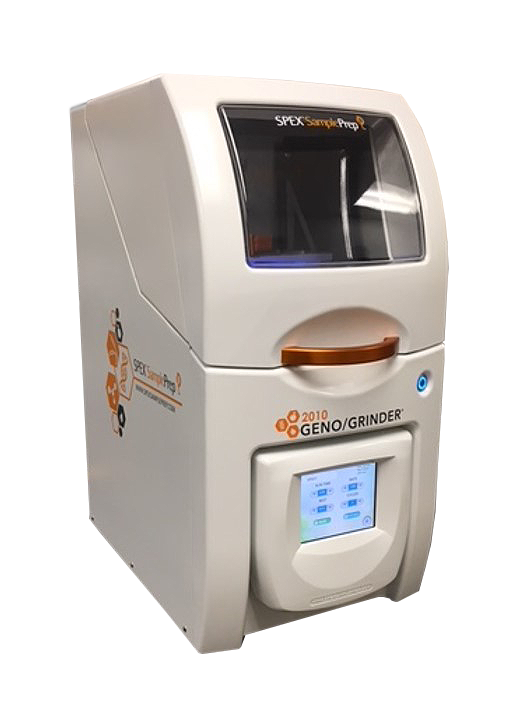
The design of the Geno/Grinder® 2010 has been completely redesigned! This proven homogenizer with large processing capacity for plant and animal tissue has not only undergone a metamorphosis in terms of appearance, but also functionally! 

  • The design of the Geno/Grinder® 2010 has been completely redesigned! This panel is tiltable and removable which makes it more pleasant to operate..
  • Position of the clamp is now ‘Landscape‘ instead of ‘Portrait’ making it easier to place the samples
  • Produces less noise due to better insulation
  • Larger observation window and LED interior lighting provide a better view of the samples during the run
  • Safer; lid lock makes it impossible to open the lid during the run
  • Programmable parameters include run time, speed, cycles and pause
  • Assign different permissions per user to specific protocols and functions
  • It records information of interest to Technical Service

Proud to be sisters!

Two proud sister companies, two trusted names, SALM EN KIPP and Instrument Solutions (Instrument Solutions was recently acquired by the owner of SALM EN KIPP), with a track record of respectively 122 and 22 years in the laboratory industry!

Both sisters continue to operate independently.

1+1=3

By joining forces we offer you more than twice the knowledge, (technical) service and laboratory products and you don’t have to do anything extra for it. Our employees will arrange everything for you in the background. Both sisters are in close contact with each other and look for the best solutions for you.

We put you, our customer, first and because we have years of lab experience (144 years together), we speak your language. Thanks to our honest and professional advice, you can rely on the sisters SALM AND KIPP and Instrument Solutions for the supply of equipment, accessories, consumables and technical support.

We are genuinely proud of this partnership, proud of what we have already achieved together with you. And a little proud of where we are going with you in the near future.

Little girls grow up, and faster than you think.

Curious?

www.salmenkipp.nl

Questions? Feel free to contact one of the sisters!


Instument Solutions distributor for Interchim PuriFlash Systems

We are proud to announce that the French multinational Interchim has appointed  Instrument Solutions as business partner for the Dutch market for the sale of PuriFlash purification systems and PuriFlash consumables.
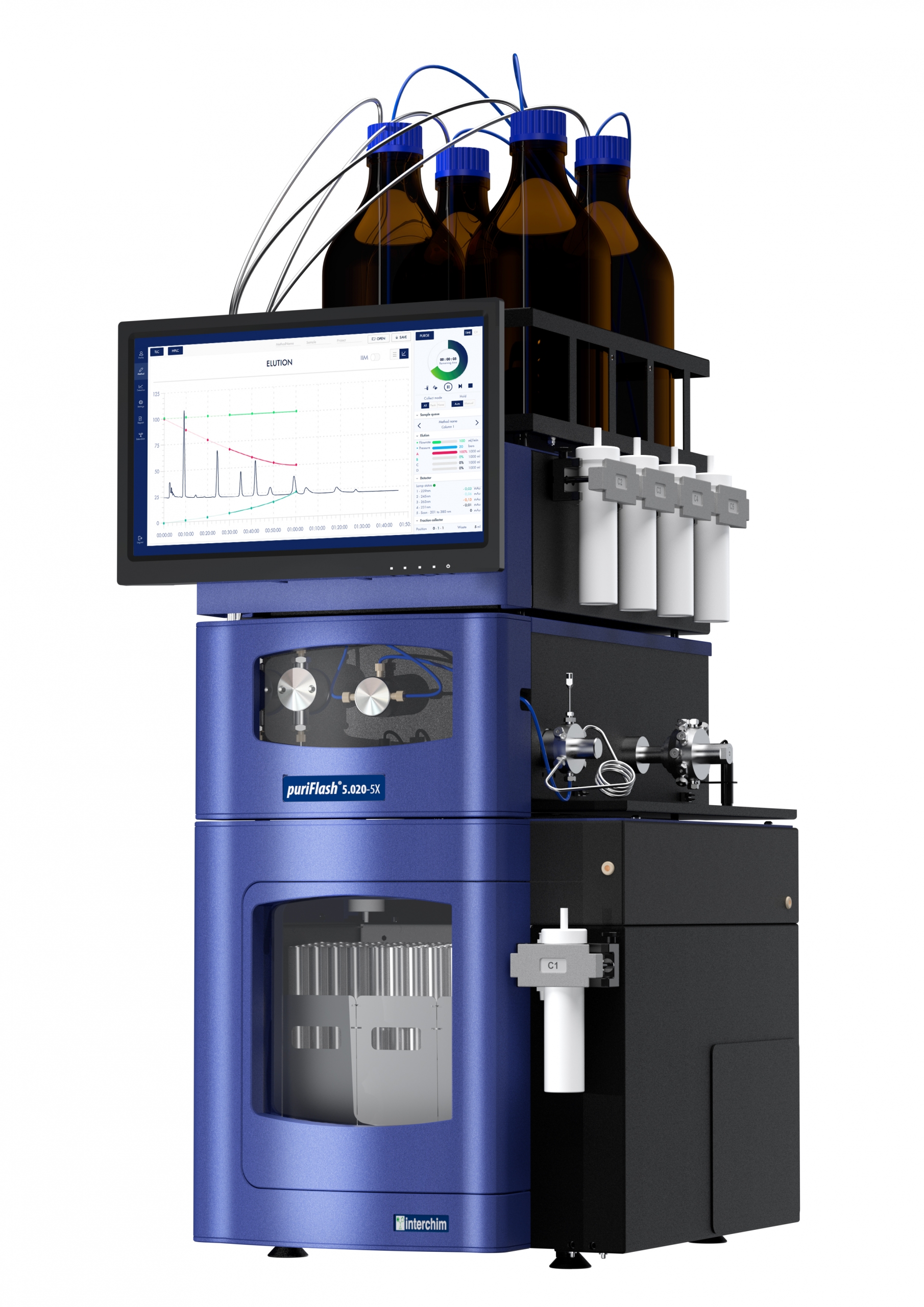
The Flash purification systems of Interchim consist of instruments for the purification of organic compounds in Normal Phase and Reversed Phase. Besides organic compounds, Interchim also offers instruments for the purification of Peptides & Oligonucleotides. In fact, PuriFlash replaces the classical HPLC column for purification.

Choosing a puriFlash® system means benefiting from state-of-the-art technology with a minimum space requirement, which guarantees optimisation of your working time and increased safety for your samples. Increase your productivity and rely on your purification system 24 hours a day, 7 days a week.

Complex technologies, hidden behind a simple button, take your Flash purifications to another dimension.

With a wide range of ready-to-use puriFlash consumables in combination with comprehensive application support, we take the burden off your laboratory staff.
The range for purification systems consists of:
– Flash Purification – pressure (up to 50 bar) and flow up to 825 ml/min)
– Preparative Purification – under high pressure (up to 250 bar) and relatively low flow (up to 250 ml/min)
– Ultra Preparative Purification – under very high pressure (up to 400 bar) and relatively low flow (125 ml/min)
– Peptides & Oligonucleotides Purification – pressure and flow similar to those of Preparative Purification Systems

Intersoft X – the intuitive and user-friendly operating software

An ultra-optimised user experience and interface for simplified operation.
With Intersoft X, you will be able to use the full power of your puriFlash® purification systems. And all that with fingertip control or a stylus pen.

Genius

To determine the correct purification method, you use Genius. This is the artificial intelligence that recommends the best purification method based on your TLC and HPLC data. This intelligence is part of the InterSoft X software.

No matter how skilled you are in chromatography, Genius and its brand new features Flash & Go, Load & Go and Boost & Go as well as RFID recognition, will enable you to increase the productivity of your laboratory and achieve expert results for all your purifications.

The video below shows how to determine the optimum purification method for the puriFlash 5.020 system on the basis of a 4-component sample:

Replay Live demo’s LabAnalyse 2020

Van 1 tot en 3 december 2020 vond de online versie van LabAnalyse plaats, georganiseerd door het FHI. In totaal vonden er 11 webinars plaats, waarvan Instrument Solutions er 2 voor haar rekening nam.

Het bijzondere van de webinars van Instrument Solutions was dat beide presentaties draaide om een Live demo met respectievelijk de EasyPREP Robotic Sample Handler van SCP Science en de Katanax Elektrische Fusion Fluxer van SPEX. Als u niet in de gelegenheid was om de webinars bij te wonen, heeft u de mogelijkheid om ze hier alsnog te volgen. Zie filmpjes hieronder.

Webinar: ‘De voordelen van boraatfusie voor XRF, ICP en andere analysemethoden’

Om de mogelijkheden van dit toestel te laten zien wordt er een boraat fusie uitgevoerd van een cement monster, waarmee voor 1 positie een glazen Bead wordt gemaakt voor XRF analyse en tegelijkertijd voor een andere positie een vloeistof voor bijvoorbeeld ICP analyse.


Webinar: ‘EasyPREP Robotic Sample Handler voor ICP Liquid Handling’

Te zien is:

  • normalisatie met bulk pomp en AccuNORM voor aanvullen laatste mililiter
  • Verdunnen
  • Toevoegen van reagentia in zowel DigiTUBEs als Microwave vessels

Een overzicht links naar alle webinars vindt u hier.


Scion Instruments borduurt verder op gerenommeerde Chrompack, Varian & Bruker technologie

Regelmatig voeren onze Service & Product Specialisten onderhoud en/of reparaties uit op GC’s  (gas-chromatografen) van Varian, Bruker en soms zelfs nog Chrompack. 

Onze relaties binnen de chromatografie zijn overwegend zeer tevreden met deze merken. Dit is met name te danken aan de robuustheid, gebruikersgemak en detectiegrenzen van de GC’s. Daarbij komt dat veel klanten het softwarepakket Galaxie/Star Workstation erg fijn vinden om mee te werken.

Opvolger

De reden van dit bericht is dat wij redelijk veel Varian en Bruker GC gebruikers tegenkomen die niet weten dat Scion Instruments al bijna zeven jaar voortborduurt op de succesvolle GC platforms. Dit doen zij in een gloednieuwe fabriek in Goes (zie filmpje hieronder). Zij produceren in de fabriek GC’s die wereldwijd gedistribueerd worden.

CompassCDS Workstation

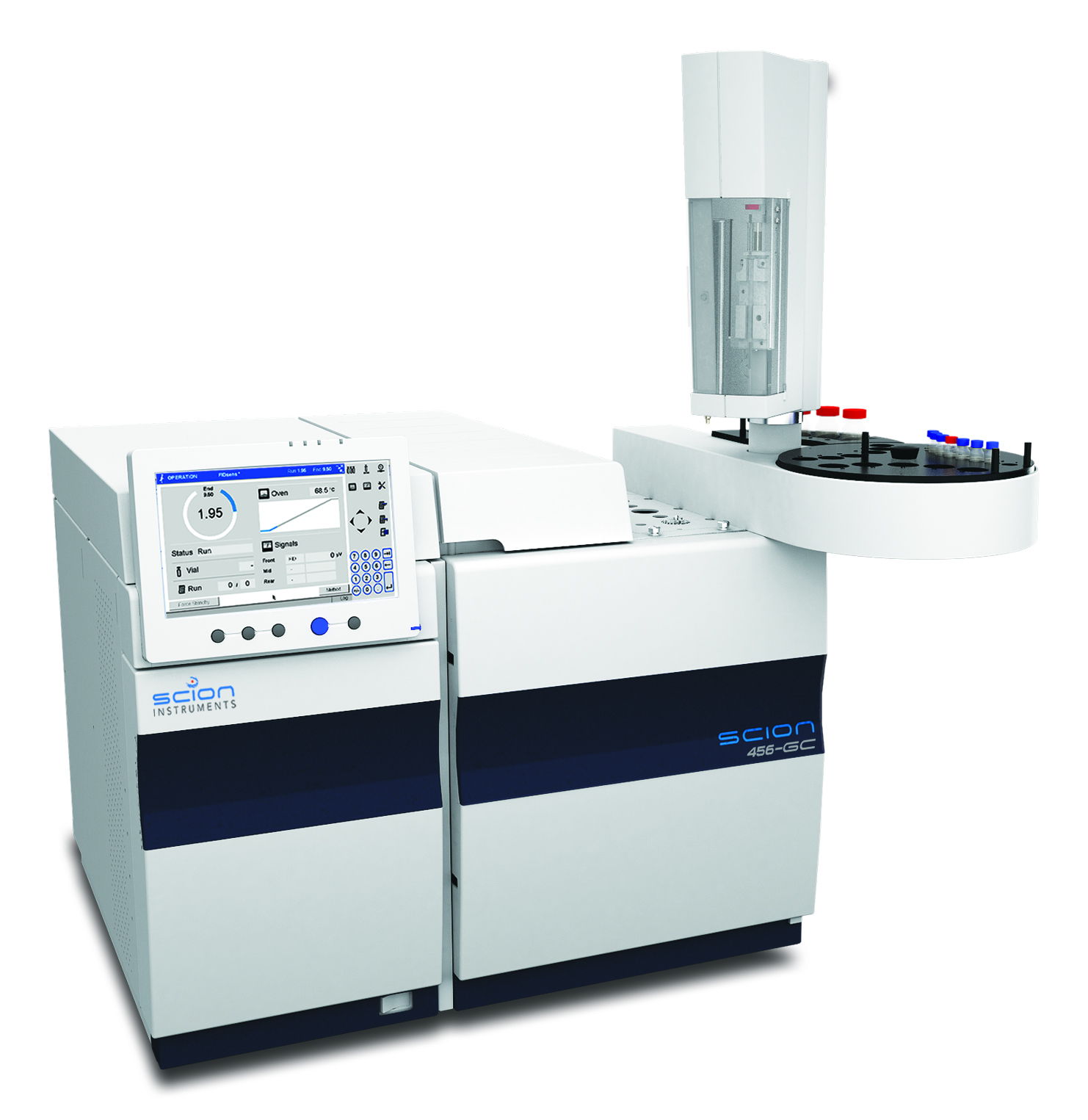
Opvolger van de Galaxie/Star Workstation is het CompassCDS Workstation. Deze software heeft de eigenschappen van de vertrouwde Galaxie/Star software, maar dan uitgebreid met eigentijdse mogelijkheden. Opvolgers van de Varian 3800/3900 GC’s en de Varian/Bruker 430/450 GC’s zijn respectievelijk de Scion-436 en de Scion-456.

Er zijn drivers beschikbaar waarmee u CompassCDS ook kunt uitbreiden voor aansturing van GC’s van andere fabrikanten.

Wilt u weten wat voor u de mogelijkheden zijn? Neem contact op met onze Product Manager Sina Saidifar via telefoon (+31 6 13694318) of via het contactformulier hieronder.

Mail ons


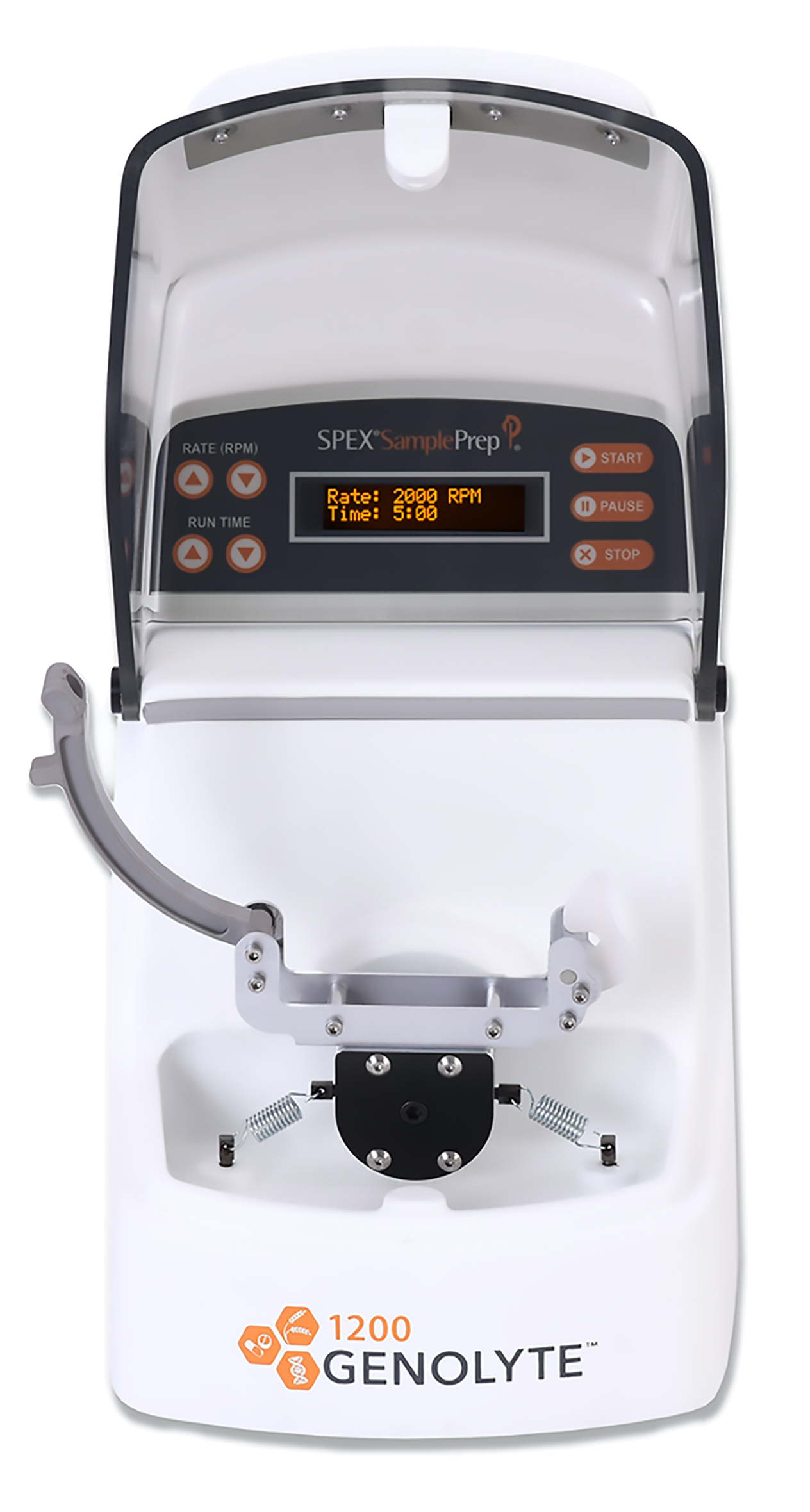
Genolyte® – nieuwe multifunctionele homogeniser & cellyser

Deze multifunctionele homogeniser & cellyser van SPEX Europe  is ideaal voor het homogeniseren van een klein aantal monsters in vials (6 x 2mL, 4 x 5mL, 2 x 7mL en 1 x 12mL).

De Genolyte maakt een oscillerende beweging met een hoge intensiteit. Deze beweging in combinatie met een snelheid, die instelbaar is tussen de 750 en 4000 RPM, zorgen voor een zeer effectieve homogenisatie. En dat binnen enkele seconden!

Het bijzondere van deze homogeniser is dat die zowel ingezet kan worden voor de monstervoorbereiding van DNA/RNA- en eiwitextracties alsook voor het verpulveren van de hardste steensoorten tot fijn poeder.

Geschikt voor de volgende monstertypen:

dierlijk en plantaardig weefsel, celculturen, bacteriën, gist, ontlasting, aardemateriaal, zaden, dierlijk weefsel, bacteriën, gist, ontlasting en aarde

…en dus ook het verpulveren van de hardste steensoorten, mineralen, cement en keramiek.

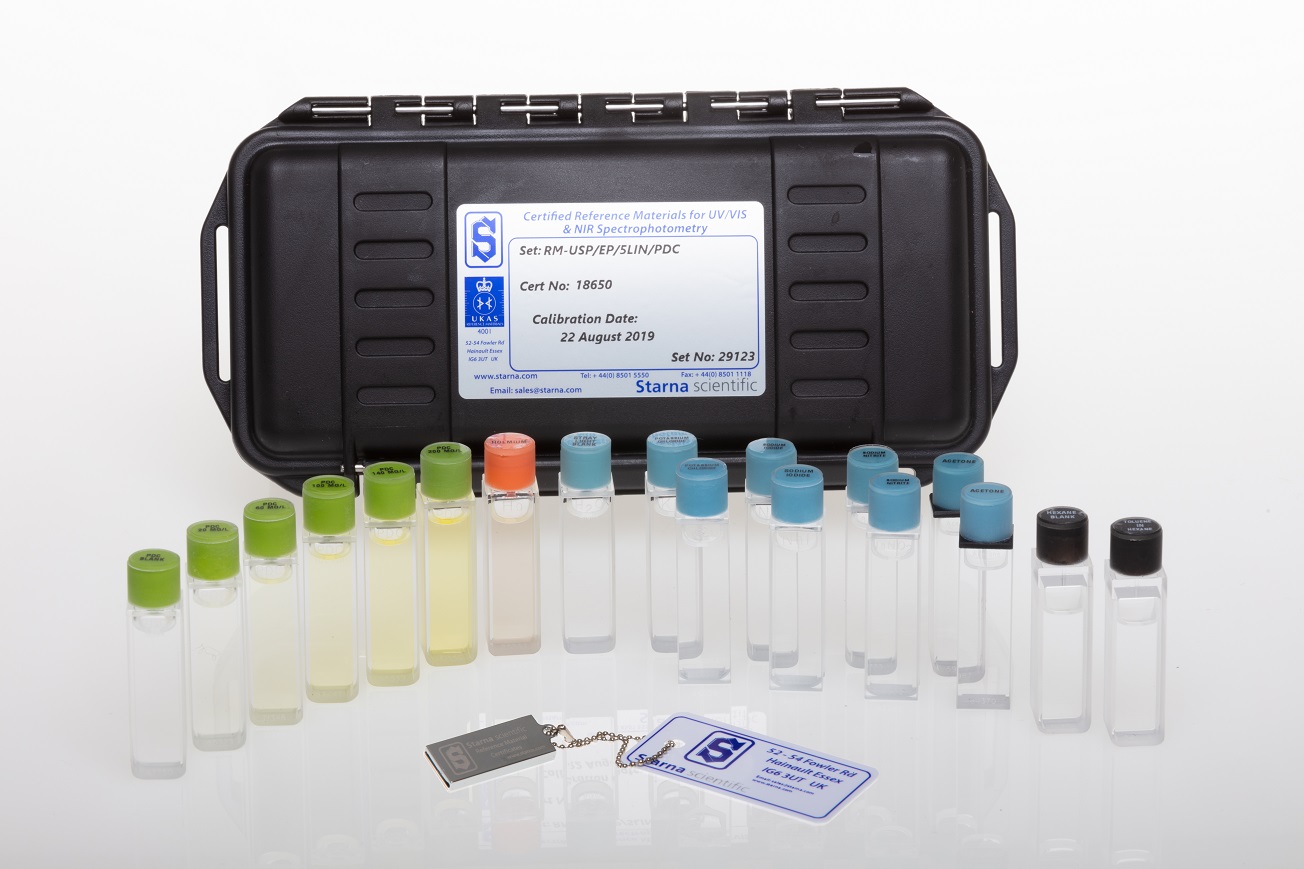
Is your spectrophotometer compiant with the latest USP and EP Chapters?

New editions of United States General Pharmacopeia Chapter <857> and European Pharmacopoeia Chapter 2.2.25, giving guidance on instrument qualification for ultraviolet and visible spectrophotometry, have recently been published. The former becomes mandatory on 1st December 2019 and the latter on 1st January 2020. Both introduce new approaches to qualification and suggest a variety of new reference materials for qualification measurements. While there are several areas of conformity between the two new standards, there are also some important differences.

What do they have in common?

Earlier versions of both standards contained a fairly limited set of tests to control an instrument’s performance for wavelength, absorbance, stray light and resolution (spectral bandwidth). Provided an instrument passed these tests it could be claimed that it was ‘pharmacopoeia compliant’. The limitation of this approach is that a qualification carried out under one set of operating conditions might not be valid under another set. A simple example would be a qualification carried out in the visible using one light source when the actual analysis was to be carried out in the UV region using a different source. While the same parameters must still be qualified, the requirement is now to demonstrate ‘fitness for purpose’, namely that the instrument has the performance to undertake the actual analysis to the required accuracy and precision. The user must therefore determine, for these four parameters, the range over which the system will be used in the actual analysis and prove compliance over that range. One consequence of this is that the simplistic approach often adopted in the past – one qualification test for each of the four parameters – may not suffice. Both standards now recommend, directly or by implication, that the values of the references used for qualification should ‘bracket’ the values to be used in the proposed analysis, which may mean that more than one reference is required. There is also a specific new requirement, in both standards, to qualify absorbance linearity: this will almost certainly require the use of more than one absorbance reference. To help meet these new requirements, additional reference materials are cited in both standards. Both standards also allow – the USP strongly advocates – the use of commercially available Certified Reference Materials.

How do they differ?

The major difference between the two new standards is their scope. Whereas USP <857> is limited to UV-visible spectrophotometers as described in USP <1857>, the new EP standard is extended to encompass HPLC UV detectors and PAT (process analytical technology) applications. This is a considerable divergence – USP <857> specifi cally excludes HPLC detectors from its scope whereas EP 2.2.25 will be mandatory for HPLC detectors. The following notes relate to spectrophotometers: HPLC is covered separately.

Another major difference is in the approach to the test materials to be used for qualifi cation. The USP states: ‘Whenever possible, certifi ed reference materials (CRMs) are to be used in preference to laboratory-prepared solutions’ and now lists a greater variety of commercially available CRMs to make it easier to establish ‘fi tness for purpose’ over a range of operating parameters. The EP, conversely, gives details for the preparation of relatively few test solutions, one of which (caffeine) is not available commercially as a CRM. Fortunately, however, it still allows the use of Certifi ed Reference Materials, so compliance can still be achieved without the need to prepare solutions in the laboratory.

Will I need new reference materials?

Most laboratories working in a regulated environment will already have a selection of references for instrument qualification. To determine if any additional references are needed to meet the new regulations the wavelength and absorbance values expected in the proposed analyses should be checked to see if they are encompassed by the available references. If not, additional references will be required. For example, holmium oxide solution is the most widely used wavelength reference, with 14 peaks covering wavelengths from 240 nm to 650 nm. Provided the wavelengths to be used for analysis lie within these limits, no additional wavelength references should be required. For wavelengths below 240 nm, however, both standards now recommend cerium oxide solution, covering 200 nm to 270 nm. For even lower wavelengths, a ‘Deep UV’ CRM is available from Starna Scientific (Hainault UK), with certified wavelength and absorbance values down to 191 nm. When including analysis above 650 nm, didymium oxide is frequently used.
For absorbance qualification, the new linearity specifications mean that more than one reference will almost certainly be required: the USP recommends that linearity is controlled at a minimum of three absorbance levels over the expected range. Potassium dichromate solution has been used for many years and covers wavelengths from 235 to 350 nm. For lower wavelengths, nicotinic acid is now recommended, covering 210-270 nm. Both are commercially available as CRMs, at a range of concentrations with absorbance values up to 3A and can be purchased in convenient ‘linearity sets’. For the visible region, the USP now lists metal-on-quartz filters; while not compatible with all instruments, these filters can be used over a wide wavelength range (250 to 850 nm). For the visible region, wellestablished neutral density (grey glass) filters are available.

Stray light qualification: whereas EP 2.2.25 formerly named just one stray light reference, potassium chloride solution, both standards now list several references covering wavelengths from 190 nm to 400 nm. Note that USP <857> now permits the use of the traditional “specified wavelength” method as well as the ‘filter ratio’ or Mielenz method cited in the 2015 edition.

Both standards recommend the well-established toluene-in-hexane solution for resolution (bandwidth) qualification.

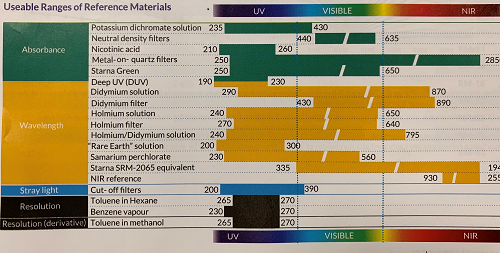
Other than the references named in the standards, a wide range of CRMs for spectrophotometry is available (see table below):

Wavelengh range of Certified Reference Materials

HPLC and PAT

The inclusion of these applications of UV-visible spectrophotometry in EP 2.2.25 requires different qualification
procedures from conventional spectrophotometry. All the references discussed above are available either as sealed
solution cells or solid filters and therefore involve no manipulation other than insertion in the instrument’s sample
holder. A few HPLC detectors can accept a conventional solution cell or filter, but for others and for PAT applications, it will be necessary to physically transfer the test solution into the measurement cell. Three of the references mentioned above, namely cerium oxide, holmium oxide and nicotinic acid solutions, are available as CRMs in vial format for this purpose and were developed specifically for HPLC. A fourth, Starna Green, can be used for both wavelength and absorbance qualification and is a specially formulated dye mixture that is
very stable, non-toxic and REACH compliant.

Conclusions

The new editions of USP <857> and EP 2.2.25 take a more holistic approach to the qualifi cation of UV-visible spectrophotometers, which must now be performed under conditions that approximate as closely as possible to those to be used for analysis. While some aspects of the new regulations may appear contradictory, the judicious selection of Certifi ed Reference Materials will allow instrument users to comply with the new regulations.

Credits for this article go to Nathan Hulme, Starna Scientific Ltd, who wrote this article. It is originally published on www.labmate-online.com.

If you have any questions about standards for your spectrophotometer or would like a quote, please call us on +31 (0) 88 46 78 786 or complete this form.