Posts

Mosh-Moah Free Vials and Caps

During sample preparation, all possible introductions of false-positive Mosh Moah contaminants into the LC-GC system must be avoided. We must be sure that all measured Mosh Moah results originate from the sample and not from the laboratory environment. The solvent we use for the experiment is tested for the presence of Mosh Moah. Gloves are used to avoid contact between the sample and the skin. Glassware is usually cleaned beforehand, but the vials and caps with septa are usually used straight out of the box.

The septa in particular can contain many Mosh Moah-related components and therefore pose a high risk of high noise or false-positive results.
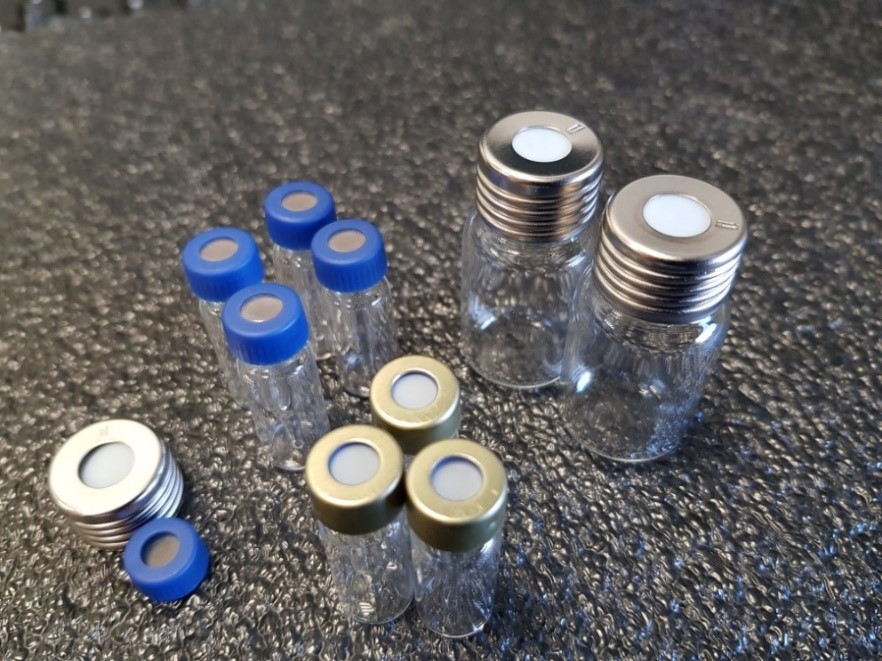
Virgin PTFE septa are a good alternative. These are chemically very resistant to most media and do not change their properties. The white PTFE septa have a high temperature stability of approximately -250°C to approximately +250°C. There is no desorption of the Mosh Moah component. This material is therefore most suitable for this application.

Problem

Crimp caps are normally used for single-injection HPLC analysis. There are two disadvantages to this closure in combination with the desired septa:

  • The inserted PTFE septa often fall out of the aluminium crimp cap when moving or closing the vial.
  • The density of the material is not always sufficient due to a low elastomer content. In addition, the thickness of the septum is only 0.25 mm, which means that material may evaporate before injection.

Our solution:

  • An aluminium crimp cap with a slight inward curve is used. This fixes the inserted thin PTFE septum in place. “Closure, aluminium crimp cap colourless, with hole and virgin PTFE septum 0.25 mm thick, 53° shore”
  • Because a fluoroplastic O-ring is incorporated between the PTFE septum and the hole, the aluminium crimp cap can now be optimally crimped without having to readjust the crimping tool. The PTFE septum is fixed in place by the rolling process used here: “Closure: aluminium crimp cap, colourless, with hole and roller blind, virgin PTFE septum 0.25 mm thick, 53° shore D and O-ring made of fluoroplastic”.

The end result is a Mosh Moah Free Vial Cap system in which the PTFE septum is fixed so that there is no contact with the septum during crimping of the cap.

For more information and prices for 1.8 and 10mL vials, please contact us.

Live Webinars for Food Analytics

Our partner Axel Semrau has organized a series of Live webinars which you can attend about the latest developments in the field of MCPD/GE analyses, MOSH/MOAH analyses and about the new possibilities to mix standards with CHRONECT Multimix.

  • Program MCPD webinar:

 Method A Unilever method automated
 Method B 3in1 automated at -22°C: yes, we can!
 Method C DGF Fast & Clean: within 45 min ISO-results
 Method D Zwagerman to become ISO in 2021: we are ready!
 Choice in Single Head or Double Head automation
 Choice in Single Quad or Triple Quad MS detection
 Choice in GC/MS manufacturers
 FAT & SAT for immediate use after installation

  • The focus of the MOSH/MOAH webinar is on the new evaluation software and epoxidationThe webinar CHRONECT Multimix will show you how easy it is to create the PAL Sampler exact standards

After following these Live Webinars, you will be able to better determine which methods best suit your laboratory.

Below are the dates of the webinars in combination with the registration link.

Webinar subjects:

1
MCPD/GE 4 METHODS – ALL HAVE THEIR (DIS)ADVANTAGES
Webinar in English, Tuesday 19th May 2020, 10:00h
spreker: Dr. Tobias Uber

MCPD/GE 4 METHODS – ALL HAVE THEIR (DIS)ADVANTAGES
Webinar in German, Tuesday 19th May 2020, 14:00h

Speaker: Dr. Tobias Uber

3
CHRONECT Multimix – CREATION OF STANDARDS
Webinar in English, Thursday 28th May 2020, 10:00h
Speaker: Dr. Andreas Bruchmann

4.

MOSH/MOAH – GETTING THE RIGHT RESULTS
Webinar in English, Wednesday 10th June 2020, 10:00h
Speaker: Dr. Andreas Bruchmann

Register here (selectect more webinars by using the Control key):

[contact-form-7 id=”11338″ title=”Registration Form Webinar Food Analytics”]

Are you unable to participate? The sessions will be recorded and on our website we will place links to the recorded webinars so that you can follow them afterwards.

Snelle analyse van minerale oliën in voeding

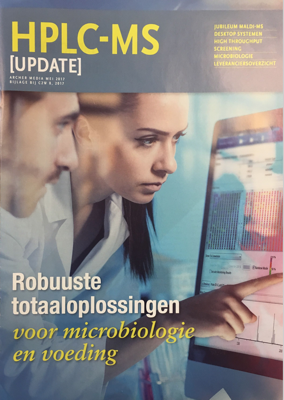
“De analyse van schadelijke componenten in voedingsmiddelen, zoals overblijfselen van minerale oliën, zijn een hot item. Er is namelijk gebleken dat er stoffen uit verpakkingen, bijvoorbeeld van de drukinkt op karton, in ons voedsel terecht kunnen komen. De groep stoffen die MOSH (Mineral Oil Saturated Hydrocarbons) heet wordt ervan verdacht schadelijk te zijn.  Voor de groep die MOAH heet (Mineral Oil Aromatic Hydrocarbons) is dat al bewezen. Een goede analyse van de MOSH en MOAH fractie is daarom belangrijk. Daarvoor heeft Axel Semrau, partner van Instrument Solutions, een specifieke methode ontwikkeld gebaseerd op een koppeling van LC en GC.

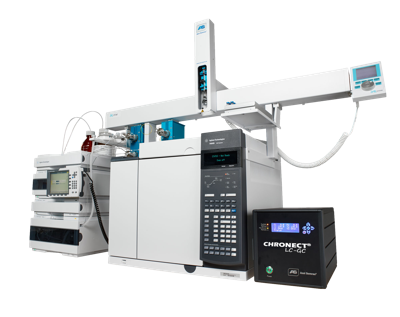
Het PAL injectiesysteem is niet alleen een automatische injector, maar is de schaker tussen LC en GC en kan verder ook automatische monstervoorbewerkingen uitvoeren. Voor de MOAH fractie is dat bijvoorbeeld een epoxidatie-stap. Hiermee worden natuurlijke lakenen uit het monster gehaald die anders in de MOAH fractie zouden komen. Daarna wordt met behulp van de LC de MOAH en de MOAH fractie gescheiden van de matrix. Deze fracties worden tegelijkertijd op twee GC-kolommen geschieden en gedetecteerd middels FID. Deze simultane analyse geeft natuurlijk een aanzienlijke tijdwinst.

Een essentieel onderdeel van dit systeem is de Chronect box, een computerinterface met speciaal ontwikkelde software die de communicatie tussen alle losse componenten verzorgt. In deze box zit een groot deel van de kennis en expertise van de ontwikkelaars verwerkt. Ook de GC-kolom is speciaal ontwikkeld, zodat grote volumes kunnen worden geïnjecteerd, maar zonder de nadelen daarvan. Detecie van 0,6 mg/kg MOSH en 0,15 mg/kg MOAH is mogelijk met een lineariteit die de hele concentratiereeks bestrijkt die in voeding gevonden is.”

Jan Volkers, Product Specialist Chromatography Solutions, Instrument Solutions

Bron: HPLC-MS [UPDATE], Archer Media mei 2017, bijlage bij C2W 8, 2017

PAL System User Event 2017 – 14 maart 2017

Instrument Solutions organiseert in samenwerking met haar Duitse partner Axel Semrau op 14 maart 2017 bij Avans+ in Breda het 2e PAL System User Event Benelux. Centraal tijdens deze dag staan PAL System automatiseringsoplossingen specifiek voor de voedingsmiddelenindustrie. Bekende oplossingen die al succesvol op de markt zijn de analyse van MOSH MOAH, Sterolen, PAK’s, FAME en 3-MCPD.

Met de komst van de PAL-RTC kunnen handelingen als wegen, pipetteren, filtreren, indampen, verdunnen en centrifugeren volledig in het PAL System geïntegreerd worden.

Specialisten van onder andere fabrikant CTC Analytics en onze partner Axel Semrau zullen u een aantal voorbeelden uit de praktijk laten zien en demonstreren.Axel Semrau logo

Aanvang: 10:00uur
Einde: tussen 16:00 en 17:00uur
Locatie: Avans+ in Breda
Kosten: geen (inclusief lunch)

Een voorproefje van de PAL3 generatie:

  • PAL LSI – robuuste & betrouwbare monsterverwerking
  • PAL RSI – robuust werkpaard
  • PAL RTC – hoogste productiviteit

Programma:
09.30 – 10.00u Arrival participants
10.00 – 10.15u Welcome and introduction – Govert Schröder, Sales Manager Instrument Solutions
10.15 – 11.00u Introduction of new products – Mr. Mevio Heierli, CTC Analytics (manufacterer of PAL System)
11.00 – 11.45u MOSH-MOAH recap and latest developments epoxidation automation – by Mr. Andreas Bruchmann, Axel Semrau
11.45 – 12.30u 3-MCPD solutions: 3 Official Methods and introducing DGF-fast  – by Mr. Tobias Uber, Axel Semrau
12.30 – 13.15u Lunch
13.15 – 14.00u Introducing SIM innovation solutions for chromatography/mass spectrometry – by Mr. Rolf Eichelberg, SIM – Scientific Instruments Manufacturing
14.00 – 14.30u PAL-RTC modules for dilution, stirring, shaking, pipetting and more – by Govert Schröder
14.30 – 15.00u Determine whether there is a need for training in Sample Prep Automation – by Mr. John Haveman, Avans+
15.00 – 15.15u Break
15.15 – 16.00u Introduction PAL-RTC: Standard Dilution Workbench – by Mr. Tobias Uber
16.00 – 16.30u New products to be expected in 2017 – by Andreas Bruchmann
16.30 – 17.00u Closure and Networking

Artikel in LABinsights over Nofalab die investeert in Mosh-Moah analysesysteem

‘Na de accreditatie kunnen we los gaan’, is de titel van het artikel dat in het december 2016 nummer van LABinsights
staat. Onze klant Nofalab heeft vorig jaar een volautomatische analysesysteem gekocht dat zij inzetten voor onderzoek naar minerale olieverontreinigingen (Mosh Moah) in Food, Feed en verpakkingsmateriaal.

Link naar artikel:LABinsights artikel Nofalab Mosh Moah

foodwatch: Supermarkten negeren oproep over MOSH MOAH

foodwatch 400x400

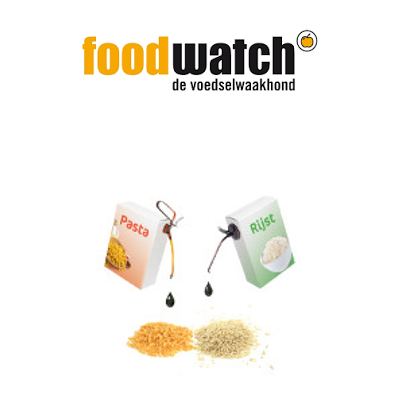
Supermarkten negeren de oproep van minister Schippers om de vervuiling van hun producten met de gevaarlijke minerale oliën MOAH MOSH aan te pakken. Dat concludeert foodwatch naar aanleiding van nieuwe laboratoriumtesten waaruit blijkt dat in 9 van de 12 geteste huismerkproducten van Albert Heijn, Jumbo, Aldi en Lidl het gevaarlijke MOAH aanwezig is. De gevonden vervuiling werd vooral aangetroffen in pasta’s als macaroni en tagliatelle. Daarnaast blijken de geteste spaghetti ’s van zowel Jumbo als Albert Heijn sterk vervuild met MOSH. MOAH wordt ervan verdacht kankerverwekkend te zijn, terwijl MOSH ervan wordt verdacht weefselschade te veroorzaken. In antwoord op Kamervragen deed de minister al tweemaal een oproep aan bedrijven om hun verantwoordelijk te nemen en veilige producten te garanderen.

foodwatch: “Meer dan een half jaar na onze eerste test liggen er nog steeds sterk vervuilde producten in het winkelschap. De door de minister gewenste ‘eigen verantwoordelijkheid’ van bedrijven is ver te zoeken. De voedselindustrie waakt niet over onze gezondheid – deze wens van minister Schippers is naïef. De overheid hoort verantwoordelijkheid te nemen voor de volksgezondheid. foodwatch wil dan ook dat het kabinet hiertoe zo snel mogelijk veilige verpakkingen verplicht en residunormen opstelt.”

bron: foodwatch

Oplossing

Instrument Solutions heeft voor voedingsmiddelen producerende bedrijven een oplossing waarin zowel MOSH als MOAH in één analyserun worden geanalyseerd. Deze oplossing wordt op de stand van Instrument Solutions tijdens de WOTS (World of Technology and Science) getoond (hal 7 E114). Dit evenement vindt plaats van 4 tot en met 7  oktober 2016 in de Jaarbeurs te Utrecht.

Bovendien dingt Instrument Solutions met deze innovatie mee met de TechAwards. Stem op onze inzending zodat wij kans maken op extra Exposure tijdens de WOTS.


Snelle MOSH MOAH analyse

Mineral Oil drops

Onze Duitse partner Axel Semrau®¹ heeft voor een snelle MOSH MOAH analyse een oplossing ontwikkeld die is gebaseerd op een LC-GC koppeling. Hiermee worden in één run simultaan de MOSH en de MOAH geanalyseerd. Deze methode biedt een hoge monster doorvoersnelheid, reproduceerbare waarden en hoge gevoeligheid.

Via Instrument Solutions is deze oplossing nu ook in de Benelux verkrijgbaar.

Wat is MOSH MOAH?

Regelmatig worden voedingsmiddelen gevonden met ongewenste resten van minerale olie die in veel gevallen afkomstig zijn uit verpakkingsmateriaal. Met name als hierin drukinkt gebruikt wordt die minerale oliën bevat, komt het voor dat koolwaterstoffen uit de inkt naar het voedingsmiddel migreert. Dit effect wordt vaker gevonden bij gerecyclede verpakkingen, maar komt ook voor bij nieuwe papiervezels. Deze migratie vindt plaats als er een rechtstreeks contact is tussen het voedingsmiddel en het verpakkingsmateriaal, zoals bij rijst.

In veel gevallen is er een toename van de concentratie koolwaterstoffen en MOSH’s (Mineral Oil Saturated Hydrocarbons) en MOAH’s (Mineral Oil Aromatic Hydrocarbons) in het bijzonder. De gezondheidsproblemen die in verband staan met deze contaminatie zijn al in december 2009 door het Bundesinstitut für Risikobewertung, BfR, beschreven. In haar beoordeling kwam de BfR tot de conclusie dat de overdracht van minerale oliën aan voedingsmiddelen met een hoge mate van urgentie moest worden geminimaliseerd.

¹Lees bericht over samenwerking met Axel Semrau.