
AZURA® GPC & SEC chromatography
Gel permeation chromatography (GPC) & and Size Exclusion chromatography (SE

The KNAUER line of GPC-SEC chromatography systems, called AZURA® SEC, provides solutions for a variety of applications and laboratories. These systems perform analysis, separate components from samples and fractionate them by size and molecular weight. This makes them valuable in industries as diverse as polymer production, food, biochemistry and pharmaceuticals, and equally valuable in research settings.
These systems have several variants, each tailored to specific laboratory needs. For example, the AZURA SEC Compact is designed for cost-conscious solutions, while the AZURA SEC Lab provides optimal analytical performance.
Robust system solutions for your GPC/SEC analysis, fractionation and GPC cleanup needs
Features
- Optimized systems for GPC/SEC applications
- Suitable for organic and aqueous solventsHighly accurate double-piston pump with extra-low pulsation
- Sensitive refractive index detector optimized for low drift
- Dedicated GPC/SEC software based on ClarityChrom
- Wide range of detector types available
- Optionally available degasser suitable for organic solvents
Principle of GPC/SEC
How does GPC/SEC work?
Gel permeation chromatography (GPC) and size-exclusion chromatography (SEC) separate analytes by size using special columns with a porous matrix. The basic principle of separation is based on the fact that smaller molecules are more likely to penetrate the pores, so their travel time through the matrix is longer than that of larger molecules. Separations (usually of a mixture of polymers, polysaccharides or biomolecules) are facilitated by choosing the optimal particle and pore size and column length. GPC/SEC is often used for quality control and R&D.
The solvents used in polymer analysis are chosen based on their ability to dissolve polymeric substances – and therefore may damage certain components of a device. And the use of salt buffers in SEC is damaging to metal parts of the system. Therefore, all parts of the system that come into contact with liquid, from valves and seals to hoses, must be carefully considered when developing such systems.
What do I need for GPC?
GPC columns are usually long and runs are performed at low flow rates up to 1 ml/min and at low (<100 bar) pressures. For accurate molecular weight determination, which is the goal of most GPC/SEC users, a good isocratic pump is essential for a stable baseline. Also, a degasser suitable for a wide range of partially highly aggressive solvents is very important for reproducible results. In addition, temperature is critical for many GPC applications, so a thermostat to control column temperature is essential.
Because very aggressive media are often used in polymer analysis, all wetted components must be compatible with the solvent used. Depending on the polymer, it is important to consider this when configuring a GPC system.
What is GPC Cleanup?
GPC Cleanup is a sample preparation method based on gel permeation chromatography (GPC). It is mainly used to perform general cleaning tasks on a wide range of sample matrices such as food, tissue, plant and environmental samples. High-weight molecular substances such as lipids, proteins, natural resins, cellular components and steroids, which interfere with subsequent analysis of pesticides, for example, are efficiently removed.
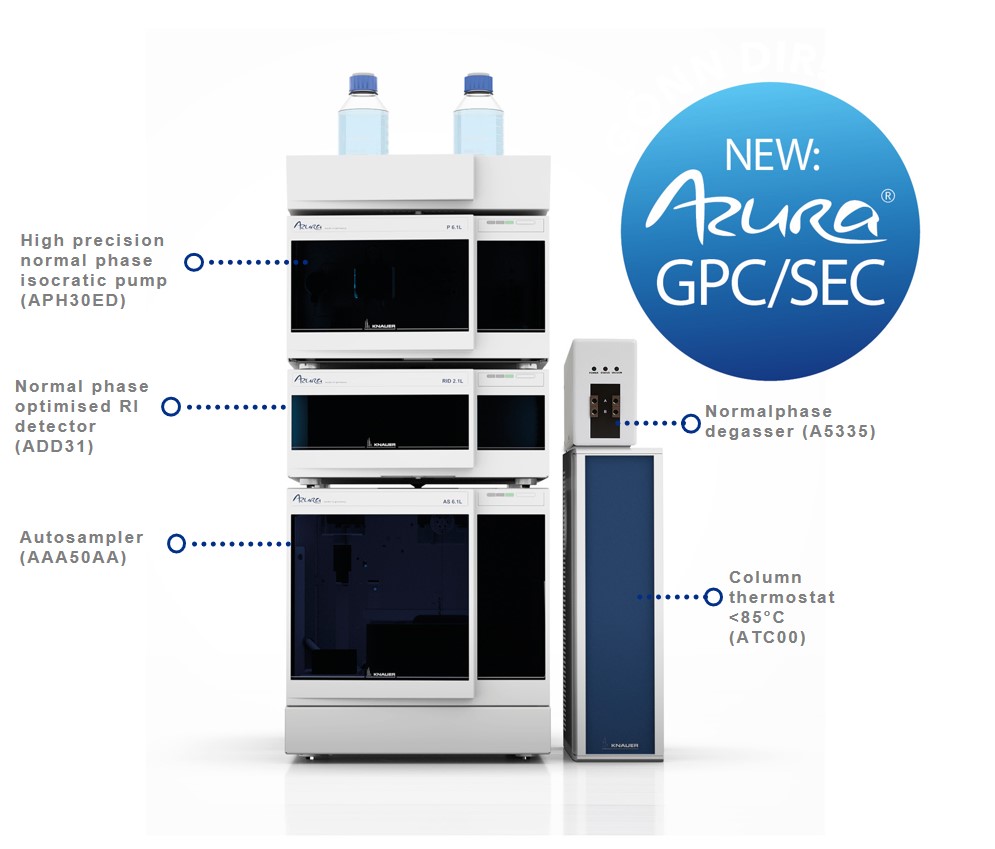
4 examples of AZURA GPC/SEC Systems:
AZURA SEC Compact Systems – simple and attractively priced with full analytical GPC potential
AZURA® SEC Compact systems present a remarkable balance between price and performance, making them the optimal choice for any laboratory entering the world of GPC/SEC analysis. These systems find application in process control, as well as in laboratories with limited financial resources and educational laboratories.
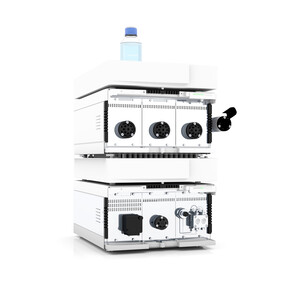
The core component of the systems is the Assistant ASM 2.2L, a docking station that accommodates up to three compact devices. Within one enclosure, valves, pumps and UV detectors can be combined. Users can easily perform routine maintenance, such as replacing a lamp in a detector. The modular design allows additional components to be added to the systems at any time. Here, the docking station comes with a pump including a pressure sensor and a valve actuator with injection valve for accurate sample feeding.
Key features
- Flexible, easily expandable modular concept
- Suitable for organic and aqueous eluents
- Injection via valve actuator for minimal pressure spikes
- Powerful RI detector
- Column thermostat CT 2.1
Upgrade options
- Save on operating costs with automatic solvent recycling valve
- Degasser
- Automatic samplerDetectors (RI, UV, ELSD, PDA, FLD, ECD)
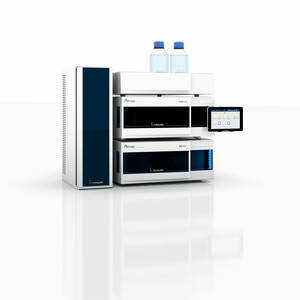
AZURA SEC Lab – reliable and flexible for even the most demanding GPC separations
AZURA® SEC Lab systems are preferred by laboratories demanding extremely high analytical performance. Incredible flow precision is combined with ultra-low pulsation in the system, resulting in impressive precision and reproducibility of retention volume.
Laboratories requiring extremely high analytical performance prefer to choose the AZURA® SEC Lab systems. The system combines incredible flow precision with ultra-low pulsation, and this interplay results in impressive precision and reproducibility of retention volume.
Large capacity
With the autosampler, it is possible to inject up to 768 positions via microtiter plates, or use 108 standard 1.5-mL sample vials. This makes the autosampler exceptionally suitable for larger sample volumes, and it is the ideal option for laboratories with a large sample throughput. Its reliable and robust design ensures that it acts as a tireless force in any laboratory.
Key features
- Unsurpassed flow precision combined with ultra-low pulsation for
Highest analytical performance - Suitable for organic and aqueous eluents
- Highest level of automation
- Expandable modular concept with a wide range of detectors
Upgrade options
- Save on operational costs with automatic solvent recycling valve
- Degasser
- Detector (RI, UV, ELSD, PDA, FLD, ECD)
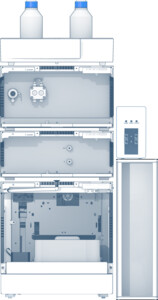
AZURA SEC Semi-Prep – automatic separation and fraction collection
AZURA® SEC Semi-prep systems offer the ability to fractionate specific molecular weight ranges or perform other purification tasks. These systems can deliver flow rates up to 50 ml/min thanks to a pump, making them suitable for virtually any semi-prep GPC/SEC column.
The modular design of the AZURA platform and the special PurityChrom® software allow users to flexibly adapt the systems to various separation tasks.
Fraction collection can be performed in several ways:
- Manual: Direct control for fraction collection
- Volume-based: Collection at set volumes
- Peak-based: Collection based on detector signal
- From switching valve to fraction collector solutions
Key features include:
- Modular concept suitable for various separation and purification tasks
- Flow rates up to 50 ml/min
- Automatic sampler with up to 10 ml injection volume
- Suitability for both organic and aqueous eluents
- Choice between manual sample injection or automatic sampler
- Option for single or multiple fractions
- Cost savings with optional automatic valve for solvent recycling
Available detectors for Semi-prep include:
- Special high-flow RI detector (as in this system proposal), usable up to 100 ml/min
- UV detectors UVD 2.1S and UVD 2.1L
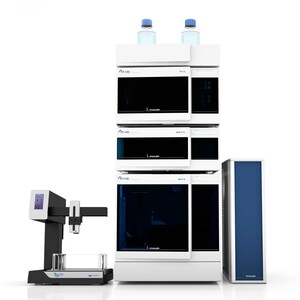
AZURA GPC Cleanup – save time with automatic sample preparation
Save time and labour by moving away from manual sample preparation. The AZURA® GPC Cleanup system automates labour-intensive and time-consuming cleaning tasks based on gel permeation chromatography (GPC). It also improves the reproducibility and quality of the clean-up. After loading the sample, the specialised system performs fully automated processing for up to 15 samples, all while taking up minimal workspace. The system is based on the versatile AZURA® instrument platform and can be adapted to individual requirements. For intuitive device operation directly on the system, there is the cost-effective Mobile Control software, optimised for touch control.
In accordance with recognised methods for the determination of pesticide residues
- Method 984.21 – AOAC International
- EPA SW-846 Method 3640A – US Environmental Protection Agency
- AEN 12393 and EN 1528 – European standard
- L 00.00-34 Method according to §64 LFGB (formerly § 35 LMBG)
The AZURA® GPC Cleanup system was selected by Analytical Scientist for ‘The Innovators 2017’ product. Click here to read the full article.
Contact Form
This post is also available in: